'10 worlds
What a great race. I was on pins and needles. And the camera
But how awesome was it?! I mean, this dude IS a champion!!
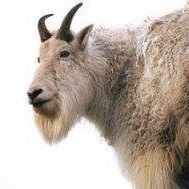
Goatish ramblings.
I'm entranced by Ken Burn's The Tenth Inning.
It felt good to be a bike racer today. Results not terrific, but I felt good. Empowered. And that feeling--I'm pretty sure that's why I race bikes in the first place.
(And I haven't raced in over two months, so there's that.)
I've spent much too little effort chronically the events of our massive summer road trip as it was happening. There was so much goodness. But here's a little taste. At least it's a little taste of the riding, but even a banquet of riding stories would be just an appetizer of the grander Goatish fun of the trip. (What'd ya think of that last sentence? A little too much?)
The Goatmobile (our new swagger wagon) prepped for the trip. The two small wheels at the front of that heap atop the roof are the back wheels of our jogger stroller. The box is loaded with camping gear. The back is loaded with all the crap a family of five needs for a six-week road trip. And seats will soon be loaded with the five of us: N (36), V (36), A (12), M (8), and R (1).
Our first night was spent in a mosqueto-infested swamp on the shore of Lake Michigan, the second with dear friends in Rochchester, MN. Then the Badlands (a pre-dawn ride through Badlands NP remains a trip highlight), and the next day at Mt. Rushmore and the Black Hills. An early morning ride through Custer State Park was interrupted by a full-on buffalo orgy spilling out over the highway. I counted 65 buffs, but there could have easily been double that number.
After spending nine or ten days in Idaho Falls, which included a wonderfully adventurous 72-mile road ride (30 some miles of which was over unpaved USFS road), and an mtb misadventure where I fell (sort of head/shoulders first) down an eight-foot embankment into essentially a trough of cow dung, we made it to Boise. At dawn the next day I rode across town and up the gravel road to Table Rock, a table-like bluff situated prominently in the foothills just east of the city.
A favorite ride for Boise folk is the 16-mile jaunt from the city to the base of Bogus Basin Ski Resort, a climb of about 3500'. As I climbed the road I got to wondering if there was an all-dirt way to get to the ski station; not just the lower lodge, where we ride our road bikes, but all the way to the 7,500' peak of Shaffer Butte. A few days later I found it. An estimated 4800' net elevation gain in a more or less steady climb. On the day, probably more like 6000' gross elevation. It was a dee-light-full ride. (Punctuated with the obligatory shot of my ride atop the summit.)
After a week in Boise, we were back in Idaho Falls, then to Utah for a week in and around the Wasatch Front. A friend took me on a lovely five-hour mtb ride; a true loop, we never rode the same trail twice. I wish I knew the names of all the trails. We started high in Millcreek Canyon, crossed the ridge into the Canyons Resort, meandered south near the 8000' line into Park City Resort, then climbed back up the ridge at Guardsman's Pass (Big Cottonwood Canyon), rode north along a section of the Great Western Trail, and then eventually descended back to the upper Millcreek trail head. Those Wasatch trails are such a pleasure. I'm very, very jealous.
There was other great mountain biking in Utah--the Draper foothill trails, Strawberry Reservoir, the Snow Basin area above Ogden--but I had to pull the road bike from the quiver once more in Utah Co., my sense of nostalgia for the dense aspen forests of the Alpine Loop being too strong to resist. (Also, last time I mountain biked in American Fork Canyon--three years ago--I broke my collarbone. So I chose the road this time...)
On the way home we made stops in both Grand Junction and Colorado Springs, Co. (two Colorado towns whose names those in-the-know shorten with casual non-proper noun type appellations--"The Junction" and "The Springs"...and now you know). In The Springs, after a morning mtb jaunt through Palmer Park, a friend took me up "The Incline." Fifteen years of visiting Colorado Springs and I had no idea this existed. But it's awesome. Two thousand feet of elevation over an average grade of 41% (max grade 68%). There used to be rails, apparently, and a cable car-style car that took people to some kind of lookout/resort atop the hill. But that closed in 1990, and now people (including me) illegally access and climb the old rail line. Apparently the Incline is a favorite winter training playground for Olympic athletes, presumably when there's no snow.
I enjoyed my walk up. I even ran the last 50 feet or so. But I took the trail down.California's "Proposition 8" has been overturned. You can read about it lots of places, this is one of them.
The article I linked above reports the judge to have written in his decision:
"...Proposition 8 fails to possess even a rational basis... Plaintiffs do not seek recognition of a new right. To characterize plaintiffs' objective as 'the right to same-sex marriage' would suggest that plaintiffs seek something different from what opposite-sex couples across the state enjoy--namely, marriage. Rather, plaintiffs ask California to recognize their relationships for what they are: marriages."
Yup.
I sincerely hope the opposition will finally stand down. It's just so much wasted energy. Wasted negative energy. Bad for the soul. Bad karma.
But you know, I'm pretty sure that in the years to come those who presently are given to hating will look back and realize it wasn't such a big deal after all. Well, most of them anyway. (I'm an optimist.)
Folks, I promise, the world will not come to an end because boys are marrying boys and girls are marrying girls. So just get over it.
Live and let live...
After returning to a favorite climb of yesteryear last Saturday--Bogus Basin Rd--and extending the usual lower parking lot finishing area to the upper lodge, and then up the cat track / double-track below Superior Chair on the road bike, I was inspired to find an all dirt path from Boise to Shafer Butte today.
I started at Camel's Back Park, at an elevation of approximately 2,800', proceeded up Hull's Gulch, Corral's Trail (I think), then Scott's Trail (though I mistakenly thought I was on Hard Guy's trail, for those that know what I'm talking about) until getting to the USFS road that 8th Street becomes. Then I just climbed, climbed, climbed. A slow grind up the road, past areas of pending development and majestic views to the left of the foothills, valley, and Bogus Basin Rd, and breathtaking views to the right of mountain ridge after mountain ridge into the Great Beyond. I passed two bear cubs scurrying up trees on my route. I didn't wait to see if their mother was around.
Finally, the road dumps out at the top of Chair #1. Pinesomethingorother Chair. From there I followed the cat tracks to skier's right around the ridge and up to Superior Chair, Deercreek Chair, and finally to the Shafer Butte summit, 7,600' above sea level.
That's a net elevation gain of 4,800', but with all the ups and downs along the way, surely closer to 5,500'. With the bit of climbing still to do in descending the mountain (because of time constraints, on the paved road, unfortunately) I grossed I'm sure well over 6,000' for the day.
Anyway, the climb to the summit took just under three hours...and was absolutely fabulous. A lovely, lovely three hours. So much fun I'd love to jump right back in the saddle and do it again. Today. Right now. My soul is capable of so much more saddle time than either my poor body or lifestyle can sustain, but what time I get to ride (which, relatively speaking, is quite a lot, I'm aware) is a blessed treasure.
Baby bears do. At least, that's what I heard.
I encountered my first Michaux State Forest black bears yesterday. Three. Mama bear and two cubs.
Riding up a heavily wooded ravine I noticed a little movement up the trail. In that moment prior to recognition, prior to anything that can appropriately be described as thinking, I thought it was another rider. Movement. (Click-whirr.) Human. No, dog. No...bear!
I stopped immediately. She only glanced at me. Dismissively. But then her cubs saw me and they went flying into the woods, barking. Not sharp and distinct like a dog's bark, but sort of a sore throat, muffled bark. I didn't see them until they started moving. When I left them they were both 15 feet up trees.
I would have loved to have stayed and watched them, but it was one of those moments you're reminded of your own puniness before lady nature. I headed out. Quickly.
This has me fascinated. And jealous.
I love that her signing is a kind of dance. Awesome.
...
In other news, I've been playing a little tennis lately, which has prompted me to buy a racquet. It came today: Wilson BLX Surge.
As it turns out, the racquet led me to YouTube...because, you know, racquet = guitar...and I needed something inspiring to play.
The longest day of the year and the sun set by 8:30. Something I can't quite get used to about living on the East Coast.
Yup, I like soccer. A lot. But it's a sport that, for whatever reason (and I don't know the history), has rules seemingly intended to make it as dumb as possible.
So, four reasons why soccer is dumb, listed in increasing level of importance:
(4) There are no clock stoppages. I mean, really... It's the 21st century. Surely FIFA can manage to put a competent thumb on a stopwatch and, when the ball goes out or play stops for whatever other reason, the clock stops too. How novel. Then both the players and fans will know when the game is over.
(3) Only one referee. Or official. Or whatever he's called. This is crazy dumb. You don't want so many officials running around that they're getting in the way, but surely there's room for more. Compare soccer to basketball. In basketball, there are ten players on a tiny little court and, at the professional level, three officials. They still miss stuff. They still get calls wrong. Ya just need more than one pair of eyes. Letting the side judges call and weigh in on fouls would be a nice start, but really they need another couple dudes out there too. At least.
(2) Only three substitutions per game. At least, I think that's the rule. And it's dumb. Why not unlimited substitutions? Why not let players come out and go back in? It would keep the players fresher, which would speed up play, which would make the match more exciting and likely result in more goals.
(1) The offsides rule. So dumb. I can't even imagine the absurd logic that resulted in this rule. People say the offsides rule prevents cherry-picking. I say, what's wrong with cherry-picking? (If it's a concern, throw a defender back there on the would-be fruit-lover.) People say there's elegance to offensive strategy because of the offsides rule. No doubt. And discarding the rule would call for new strategies, but would they be less elegant? Can you imagine basketball with an offsides rule?
So there you have it, FIFA, MLA, whoever wants them. Make these changes and your sport will be so much better. So much. Fix #4 and there's room for TV breaks. Maybe you don't think that's such a good thing, but if television were able to peddle advertising slots in the traditional (American) way, it's likely there would be more television coverage, which would increase fan interest. Win-win. Fix #3 and the conspiracy element associated with officiating would be much reduced. Perceptions of fairness would increase dramatically. Fix #2 and #1 and you'll have a game with more scoring, which is of course more exciting, but will likely also significantly reduce the chances of a draw, which is the lay person's most voiced complaint about soccer.
However, even for that I have a recommendation. After 90 minutes, if the score is tied, the teams enter a series of 10-minute sudden-death overtime periods where in each consecutive period teams must give up one player, starting with the keeper. Goals will be scored.
You're welcome very much.
The New York Regional Mormon Singles Halloween Dance: A Memoir
I can't remember when I first heard of it, but I decided to read the book after it created a small uproar in a Nashville book club among friends.
I just finished.
If you're a Moth or TAL listener you've likely heard Elna's voice and a couple of her stories before. They're funny. I liked her when I heard her. Elna's an actress-turned-comedienne, and I think she's a good performer. At least on radio; I've never seen her perform in person.
Anyway, I'm not going to give a synopsis of the book or anything, just share a few thoughts. Though, I should start by saying that I understood the book to be about Mormon single life in the Big City. Pop sociology dressed up as a memoir. That's not really what the book turned out to be (though that's a book I'd like to read).
At the beginning, I found Elna to be a sympathetic character. I found myself cheering for her. I liked her. She was funny. I laughed a lot. I liked her more with each chapter.
Midway through the book, I started to rethink Elna a bit. She’d make me cringe a little. For one, I can’t believe she’d actually share all that with the whole world... At times, just too much information. I was relieved she wasn't my sister, because wow--embarrassing. And I felt for her family. I kept wondering how much of this she cleared with them and what their reaction was to having it published. (I also wondered if she was really telling the truth.) I especially felt bad for her mom.
I also started to think Elna may not be as smart and clever as I thought she was. She began to reveal herself as being insecure in a way that to say she’s very insecure doesn’t quite cover it. And she turns out to be kind of a snot. Superficial, with not as much texture as I had expected.
(Hmm... Maybe that's too harsh.)
By the end, I was mad at Elna. I didn’t like her very much anymore. She kind of gave me the willies. I would be empathetic about her feelings towards Mormonism if she wasn’t so dumb about it. And the end of the book wasn’t nearly as funny as the beginning.
Now that I've finished, I struggle to put my finger on what the book was actually about. Sometimes Elna seemed to be making making a point about the difficulty of trying to live two lives. I liked that. I think it's a universally important topic. Something a lot of readers, not just Mormon readers, can relate to. But in the end she doesn’t seem to do anything with it, which I found disappointing. Sometimes the book is about change. Personal change. But for the book to really be about that, she would need to address why the change. If left to draw my own conclusions from inference, I'm back to the conclusion of superficiality. I don't really want to be there--it seems so uncharitable--but that's all she's given me.
So...maybe it was intentional, but I felt like the book just ended and I wasn’t left with anything. And its not that I demand a resolution or whatever, but maybe a well formulated question. A...something. Even from a comedian. Because if someone asked me what the book was about I wouldn’t know what to say. It’s not about being Mormon and single in New York. It’s not really a coming-of-age story. It's not about looking for love (not really). It’s not about weight loss. It’s not about sex. It’s not about religion. It’s not even really about identity.
I guess it’s just about Elna. And Elna, it seems, is a me-monster.
I've been meaning to post a report on Killington, but, well, whatever... I mean to do a lot of things.
The whole thing ended up a bit of a disappointment, and when I think too much about it I get all riled up and it takes me a while to calm down...so I guess maybe I've just been trying not to think about it.
Anyway, Killington... Three days, three stages.
Since everyone that I was counting on going bailed on me, I offered myself up as a teammate to John Landino, the only other person whose name I recognized on the pre-reg list. He thought that idea was pretty cool, which makes him pretty cool, so I found myself "guest riding" for DeathRow Velo for the weekend. In the end, I didn't prove myself very useful as a teammate, but it was cool to have a compatriot in the field anyway.
Stage One. Four laps around an 18 mile circuit. (I wish some of the circuit races around here ran on 18-mile circuits.) A fun course. I didn't like the downhill finish much, but all-in-all a nice course.
I rode a decent race. I was active on the climb every lap but the first, trying to get into breaks and that sort of thing, but nothing came of much and I finished with the lead group of 50-60 riders, luckily dodging a spill within the last kilometer of that crazy downhill finish.
I considered going for some KOM points, but it didn't really work out. Looking back, I wish I'd tried a bit harder.
Stage Two. A brutal 11-mile time trial. All uphill, but not enough uphill to be called a hill-climb or anything. Just a long slog against false-flats and shortish climbs with no downhill recovery sections. And, as it turned out, fighting a fairly stiff wind.
Day two is where the race turned crappy. For me.
Audrey and I headed out early to the race hotel to find my TT start time. I wasn't listed. We went through the sheet three or four times. No 326. No Goatesauce.
Then I saw a little hand-written note on the GC sheet. "#326 disqualified." What?!
There was no one around the race hotel, so back in the car for a 15-mile drive to the start of the TT. I found an official, who pointed me to another official, who told me I'd have to wait for yet another official, who was out on her motorcycle. Finally, I'm told I was disqualified for removing my helmet during the race.
That's true. I did take off my helmet.
It was raining at the beginning of Saturday's race so I threw on a cycling cap under my helmet. But then the sun came out, dried up all the rain, leaving me with an uncomfortable wet cap sliding down over my eyes. I drifted to the back of the field, gave myself a cushion of a few bicycle lengths, then quickly took my helmet off, stuffed cap in pocket, and then replaced my helmet. Apparently that's enough to get you disqualified from a race.
According to the chief referee (to whom I have no kind feelings), what I should have done was gone back to the commissaire's car (I didn't know we were being followed by a commissaire), told them of my issue, and then they would have instructed me to stop aside the road, remove my cap, and then proceed. And I'll just zip right back up to the group like nothing. Yeah, right.
It took about a half hour, but I got back in the race. The kicker? I was relegated to the position of the last-placed finisher, 33 MINUTES DOWN! And I have to pay a $20 fine.
So stupid.
Oh well, so now I'm racing again, I have a start time, and I finish a respectable-but-personally-disappointing 11th, 1:12 off the pace of the winner, but 47 seconds off the pace of second place.
I had said if I didn't finish in the top 10 I'd be disappointed. I was aiming for top five. I needed to go 34 seconds faster for fifth place.
It was one of those races where I was never able to really get in the groove. There was only one section, for about two miles after the sky bridge, where I really felt on. The rest of the course I was just struggling to turn the pedals. It's too bad. I so wanted to do well in that TT.
Stage Three. A monster 61-mile loop with two big climbs and lots of broken tarmac. One sprint line. Three (I think) KOM lines.
Since I had nothing to lose, John suggested that I start the stage attacking from the gun. So I did.
About 1/2 mile in I rode off the front and was soon joined by a few others. Disorganization. Nothing came of it. Along Route 100 I tried to get away a couple more times. No dice. But then around mile 17 or so we caught a two-man break that had been away since the first climb. I launched a perfectly-timed attack and rode right away from the field. The problem was that no one came with me.
Whatever. I just kept at it. It's one of those things that you know is crazy. There's no way I'd be able to stay away. Still so much riding. A lot of climbing. A few folks pretty keen on picking up KOM points. But I went for it anyway. It felt good. And I was able to avoid all the potholes that I'd be blindly smashing into were I tucked in the pack.
I'd get time checks from the moto official. First, 20 seconds. Then 25. Up to 30.
So I kept it up. I held off a chase group of four or five motivated by the sprint line at about mile 23 or so. Max sprint points for me. A small victory. (I wish there'd been a prime to with them.)
When the sprinters caught me they didn't want to work to stay away, so I left them behind and soldiered on by myself. But when I hit the lower slopes of the climb, at mile 25 or 26, the field was bearing down on me heavily. I wasn't a half-mile into the climb before I was swallowed up. Another half-mile and I was off the back.
I figured my day was done, but some 10 miles later or so a group of about 20 came from behind with a well-organized chase. I jumped in, and by mile 47 or so we'd caught the leaders. I let them tow me to the finishing climb, and then just Sunday-strolled it to the finish, crossing the line in 48th place, nearly nine minutes behind the winner.
And that's it.
It's hard to say what could have been... I'd been in 11th place on GC after the TT without the relegation. And had I been in 11th place on GC, I would have sat in through the third stage. I wouldn't have burned my matches on the solo break. I wouldn't have been dropped on the first climb. But it's hard to know how I would have fared at the finish. That was a tough climb, and much steeper in places than what I usually do well on. A top 20 would have been great, but I doubt I'd been able to finish in the money. Just too tough a climb for this fat man.
But I'm still burning a little over that DQ.
I've been thinking a lot lately--since Killington, I suppose--about the short-lived Edgar Soto. Man, that race was a lot of fun. The inaugural event, in 2006, when I was still living in Nashville racing as a Cat 4 (2006 was my first year really back into racing since, oh, 1992), is I think still my very favorite experience racing a bicycle. A four-day, four-stage stage race. We had a strong, close-knit team. We won the sprint competition. We won the team competition. We felt like "real" bike racers. And I think three of us finished in the money.
Anyhoo, I chanced upon some photos from stage three of the 2007 Edgar Soto and thought I'd post 'em.


Tangentially, the bike I'm riding there, though broken later that year, has just been fixed. E found a guy in Shippensburg that doesn't know you're not supposed to be able to repair by weld heat-treated aluminum bicycle frames. So he patched up the broken chain stay. I haven't ridden it since the repair, but E had one of his bikes repaired too, and its already been ridden long and hard with no problems.
If I could find a (very) cheap but functional 8, 9, or 10 speed gruppo and a pair of hoops, I know just who I'd put on this rig.
Yesterday, my racist lawnmower stopped mid-way through the job. It was done. Wouldn't work.
After walking away for a couple of hours (things like this are prone to throw me into fits of rage which, later, are embarassing), I confronted the lawnmower with a fist full of tools. And this is the important part:
I took it apart, diagnosed the problem, fixed the problem, and put it back together. It started on the second pull.
This pencil-necked PhD may make a living at the chalk and key boards, but I can also fix a lawnmower.
Yes. Yes, I can. (Even a racist one.)
Everyone's talking about it, and so must I...
So my favorite take on all the hullabaloo thus far has been from Adam Myerson. Which is interesting, to me, because after Transitions (if you've seen the trailer, and liked it, don't spoil the good feeling by watching the whole film), I walked away thinking this guy was a complete douche--wouldn't even want to have dinner with the dude.
But his take on this mess I find utterly refreshing. I hate to put too fine a point on it, but, really, this is about as deep and insightful as you're going to get in the world of pro bicycle racing commentary. (Which, personally, is of course a little troubling because it's forcing me to rethink my opinion of Myerson.)
For your reading pleasure, I've reprinted most of his post here:
Pretty Boy Floyd
So by now, I'm sure you've heard about Floyd's confession. The Wall Street Journal broke the story, apparently, and there's an excellent follow up on ESPN.com. I'll let you get caught up rather than recap it here, because I want to get at what I think is the heart of the matter. Before I could even write it myself, Floyd said it to ESPN:
"I don't feel guilty at all about having doped. I did what I did because that's what we [cyclists] did and it was a choice I had to make after 10 years or 12 years of hard work to get there, and that was a decision I had to make to make the next step. My choices were, do it and see if I can win, or don't do it and I tell people I just don't want to do that, and I decided to do it."
I've actually had a blog entry about Floyd percolating for a while. I've been racing with him a lot over the past two seasons since he came back. And much like Tyler, Floyd was (is) always really nice to me. Says hi, smiles, is friendly. He doesn't ride around with an attitude, he doesn't yell at guys in the races, and when he has legs, he works hard. There was definitely a lot of "parade riding" in his first year back where he seemed to just be showing up, going to the bar at night, and not putting a lot of effort into the races. But when his form came back around, he was always willing to work for his teammates.
And so just as I did with Tyler, I struggled when Floyd was nice to me. He was not the same guy I raced with back in the day, when he was a mountain biker dabbling in the road races, or on Mercury after that. I wanted to spit on him. If he was near me in the pack, I made a point of not giving him room. If he was coming back from an attack or I was passing him in a turn, maybe I turned a little wider than I needed to. You can't make room for someone you consider invisible, or a pariah, right?
Well, that kind of negativity eats at you, too. It doesn't feel good to go out of your way to fuck with someone, and it takes something away from you. Eventually I got over it, and tried to just treat Floyd as a human who deserved a certain amount of consideration and respect. All we really want to do is race our bikes. I needed to let Floyd do that, too.
Late last season, I started to turn the corner even further on Floyd. Maybe it was the collection of Sunday nights at the bar, watching him buy people drinks after races and just generally being a funny, friendly, approachable guy. Maybe it was him saying hi in the elevators at race hotels, shyly, but with that mischievous smirk on his face. Maybe it was just watching how he kept his head down in the races, was just happy to be racing his bike - I dunno, but at some point I decided I liked Floyd Landis. And I didn't really know what to do with that.
At the same time, at no point did I think Landis was innocent, or that he hadn't been doping. But every time I'd see him talk about it, I felt like he was always winking while he did it. My understanding of Floyd's position went something like this: "Oh fuck yes I doped. I doped just like everyone else did. I did not invent doping, and I understood that at the level I was at, it was part of my job description, like Lance, like George. So why should I be the only one who goes down for it?" I saw Landis fighting the charges not because he hadn't doped, because like all his peers, he had. I saw him fighting it because he thought the system was fucked up, and I mean the whole system. The team he was on that encouraged him to dope, the labs that didn't follow their own rules, the UCI that had its own interests to protect. Why would any of us expect Floyd to "do the right thing" here, and in his mind, take the fall or be the scapegoat for a system he participated in by choice, but that he sure didn't invent?
And honestly, why should Landis have confessed at that point? Why shouldn't he fight the charges, if the mindset of the guys at the top level is that doping is part of the job? To understand this, you have to think about doping as the equivalent of slashing or crosschecking in hockey, or traveling in basketball - essentially any kind of play that's subject to a penalty. When someone gets called for crosschecking, you don't think of them as a cheater, do you? But of course, they're breaking the rules. They are absolutely cheating. But it's part of the game, and absolutely mandatory to be successful at the game, to hook or slash or crosscheck as much as you can, while still getting away with it. The point is not to NOT slash or hook. The point is to not get caught. In the previous generations of pro cycling at the highest level, this was the mindset. It's not about morals or fair play. It's just a game. It's not real life, and this is how the game was played.
On another hand, you have to also consider doping in the mindset of rider health. It may sound backward, when we're told that doping has long lasting, negative health effects. But when you train and race at that level, you literally make yourself sick with training. Hematocrit is suppressed, hormone levels drop, and the doctor comes in to bring you back up to normal health. The biggest risks appear to come when you go over the top, and try to turn your mule into a race horse. But for those guys, they have mechanics to tune the bikes, so why not doctors to monitor their health? In their insular, narrow world, it doesn't even appear to be an unethical choice. Ethics aren't even on the table. You're just in, or out.
You see the difference after guys come back, and you presume they're racing clean. Tyler and Floyd, when they were racing in the US were good, top level. They were both obviously, always talented. But it was always strange to be racing crits and being competitive with guys who won Olympic gold medals and the Tour. I found it ironic that after all they'd been through, they were right back riding in circles in America with me, like we were ten years earlier. Of course there were plenty of guys who DID say no. Danny Pate, Mike Creed, Tim Johnson - for me those are the glaring examples of guys who had a chance to be pros in Europe (Pate and Creed on Saeco, Tim on Saunier Duval) at a time when doping was still de rigueur, but unlike Floyd and Tyler, just said no and came home. And now, in a cleaner era, you see them competing at the highest level of the sport. I believe in those guys, and I think they're representative of the other path that was available to Tyler and Floyd.
Landis' defense wasn't about whether he was guilty or not. Of course he was guilty of doping. He knew it, and he knew you knew it. His defense was against being the scapegoat, being the one who took the fall. His defense was an attack on the hypocrisy of the system. So why finally come out with it now, during the TOC and Giro? Why the fuck not now? If you're Landis, and you know that despite serving your suspension and being free to race, you'll never be allowed back in at the top level, why not burn the whole fucking thing down? Why should Lance get to be an international star and hero to the world, when he's guilty of all the same crimes as Landis? Landis clearly loves bike racing and just wants to race his bike. If he can't play, then who can blame him for calling bullshit on the whole thing?
I'll shake his smokey hand the next time I see him.