Friday, February 7, 2025

tiny book reviews.2025.n7 -- Project Hail Mary by Andy Weir


I honestly don't remember how this book got on my radar. I clearly read about it somewhere, in passing, and was interested enough to open Audible and download it. Up it comes in the queue, and in blind obedience to my past self, I read it.

Science fiction: The end of life on Earth is imminent (for none of the reasons you might expect), the world's governments come together (perhaps the most fictional part of the science fiction) to launch a deep-space vessel with a crew tasked to discover a solution to the problem that's killing Earth, adventure ensues. 

Like any good sci-fi, the book is about so much more than telling a fanciful story, and as science fiction goes, I'd say it's pretty good--not great, but pretty good.

And Hollywood apparently agrees, because I believe a movie adaptation of the book is expected in 2026. So, read it now, go see the movie with your friends, and enjoy the pleasure of being insufferably pompous by telling them all the ways the movie didn't live up to the book.

Oh, and, for what it's worth, I think this book might be particularly compelling to teenage boys. There's one of those that lives in my house, and I plan to make him listen this summer as we road trip from here to there and back.

3.5 of 5 stars.

tiny book reviews.2025.n6 -- To Kill a Mockingbird


Here's at least one argument for reading as much as possible when you're young: One of life's great pleasures is to re-read a book decades on and reflect on how it hits differently. Because it always does. Hit differently. You've remembered portions incorrectly. You've completely forgotten other parts, important parts, parts that you wouldn't have thought you'd forget. You understand the characters differently. You understand the context differently. And, ultimately, I think, you begin to understand yourself a little differently.

Before the semester started, I took a quick solo trip to Alabama to...idk, do something. I rode bikes, camped, explored a half dozen crappy little Alabama towns, and--critically--rejoiced in the sunshine and exposed bare knees in the wind. I also re-read To Kill a Mockingbird (which is, of course, set in Alabama).

I don't know what to say... Y'all already know this is such a great book. It still is. 

And Atticus Finch remains my personal paragon of manhood.

I guess I don't have much more to say, but want to remind you of this delightful description of how Scout felt in her dress when spiffied up by Calpurnia before taken to Black Church:

"...the starched walls of a pink cotton penitentiary."

:-)

5 of 5 stars.

tiny book reviews.2025.n5 -- Liars by Sarah Manguso


This one was kind of a hard read, but not in the sense that it was hard to work my way through, but that I...well, I guess I can say I struggled with it...emotionally.

It's about a woman, a woman telling her story, a story of falling in love, getting married, having a child, following her husband through numerous moves as he chases his personal big rock candy mountain, then his betrayal, departure, and (briefly) her life after marriage. During their time together, sometimes he is making a lot of money, mostly he is not. And our protagonist suffers through a kind of cold, anonymous existence as she does most of the bread-winning, the child-rearing, and, it would seem, the work to keep the couple's relationship alive, but gets no recognition or validation or even gratitude from her husband for doing it. 

And when I write that out it reads like a pretty real paradigm for many women. For some women, the novel may be cathartic. Or excruciating. 

For me, in reading this book I felt...indicted. But let me be clear: I am by no objective standard the failure of a partner the husband she's describing is and still I felt indicted. Just because. I guess. I'm a man. A husband. A father. And...I guess I feel like I never quite live up to the ideal or standard I've set for any of those identities. So when I read the part where she complains that her husband never cleaned the bathroom, I felt so guilty that I nearly raced home to the cleaning supplies and got after it. I cleaned and wiped and disinfected every surface of that bathroom.

Here's a passage I found poignant enough to copy out:

Even a decent marriage drains the life of a woman. And during our worst fights, I referred to a divorce as a sure thing and impending, yet I don't know anyone with a better marriage. It really is absolute shit being a man's wife. I swear up and down that if I outlive this marriage I will never be with a man again.

Well...

So, I read this book and sorta felt like garbage (the bathroom needed cleaning anyway, so that's a positive outcome), but then a day or two later, as I was just sort of thinking about it, I came to wonder if we're meant to fully trust the narrator. See, the book is told from the perspective of the woman who's story it is. She's been rebuffed. She's lost her husband. She's lost her youth. She's kind of just...lost. But that's the thing--it's her story, and, well, in the very beginning she calls herself a liar, which is, you know, kinda like the title of the book, too. And so I began to rethink it all.

For those that have read (or watched) Fight Club, you might remember getting to the end and realizing a thing and suddenly you have to reinterpret everything you've read to that point. That's sort of where I was. After a couple of days reflection, anyway.

I've read zero book reviews or author's interviews, so I have no idea if this is the author's intention or if other readers have had similar takes. I kinda don't want to know. Because this is the beauty and wonder of art, that we can all see the same thing, yet walk away with very different experiences. Or, in my case, two distinctly different experiences.

3.5 of 5 stars.

tiny book review.2025.n4 -- The Life Impossible by Matt Haig


The first I'd heard of Matt Haig was when a friend recommended The Humans last fall. Read it. Loved it. Then I read another--How to Stop Time--which was ok, but not my favorite. Then Valerie recommended The Life Impossible and it was, again, lovely. My favorite of the three.

What Matt Haig succeeds at is writing a fun, easy-reading novel that somehow packs a punch full of thought. I wanted to write a philosophical punch, because it is, but sometimes that big p-word sort of scares people off, or makes it seem weightier and more dense, and that's not the feel you get reading these novels. The undertones are of weighty stuff, but served with such fun stories that if feels light. All three of his books I've read do this, so I assume that's his thing. 

Beyond that goodness, The Life Impossible is set in Ibiza, which I love (I haven't been to Ibiza, but I'm a regular visitor to Mallorca, so, you know, kinda the same feels...) And the taste of oranges is a bit that is central to the theme, and, well...American oranges just plain suck compared to Mallorcan oranges, so I get it. (Seriously, I love them so much. The oranges and the olives. They're everything.)

Anyway... This book is a strong recommend. It's a fun story told in a lovely voice with undertones of profundity that made reading it feel like dinner and dessert all in one.

5 of 5 stars.


Sunday, January 5, 2025

tiny book review.2025.n3 -- mating in captivity by Esther Perel


Esther Perel has been around for a while (this book was published in 2006), but may be having a bit of a moment presently, or I'm just catching up. She has a podcast (apparently; I haven't listened), she is a guest on many other podcasts (where I was first introduced to her) and people (in my circle, at least) just seem to be talking about her. So I decided I'd read her book. Or this book of hers. 


My review: It was good. Really good. Good enough that I'm now recommending it to all my married friends, or at least those friends with whom I have the sort of relationship that I can use the word "sex" in conversation with them. Because that's what this book is about. Sex. In marriage (or the equivalent). 


And...given that's the topic, I'm hesitant to offer too much more regarding my specific thoughts and/or insights. But let me say this: I found her ideas challenging, in the best of ways. Though, I was skeptical at first. 


She starts by explicitly challenging the status quo of the relationship between sex and intimacy in marriage (tell me how things are in the bedroom and I'll tell you how things are otherwise), and for the first couple of chapters I guess I was unconvinced--thinking her explanation of the status quo sounded just about right. However, by the third chapter I was coming around, and each chapter thereafter I found increasingly insightful, so that by the end I was questioning everything I thought I knew about long-term healthy sexual relationships. 


So, I liked that. 


Also, the topic of sex in marriage highlights what we should already know: there is just so much variance among the human population. In fact, at one point I was reminded of the marriage (non)advice that I give when called upon to give advice--that all marriage advice is useless, because everyone's arrangement is their own, and what works for one couple will not likely work for another, so you've gotta just figure it out for yourselves.


As I said, I'm recommending it...to all my married friends. 


4.5 of 5 stars. 

Friday, January 3, 2025

tiny book reviews.2025.n2 — you are here, by David Nicholls


A nice thing about branding this exercise “tiny book reviews” is that I can read a book, post its picture, write only a couple of not-very-descriptive-or-informative sentences about it, and I’ve still fulfilled the vision, thus protecting me both from the self-criticism of not doing something more impressive and the potential critique of some reader who might complain that I’m not really providing any useful information about the book.

To whit:

A friend (hi, Lansing!) gifted this book to Valerie and I. His review (shared without permission): 

“We…really liked it…. [I]t was so well written and hilarious and enjoyable to listen to together.”

So, Valerie and I read it. (Well, Valerie read it, I listened to it.) My review:

Fun. Enjoyable entertainment. And impossibly witty dialogue (does any human speak or has any human in the history of time spoke as cleverly as the characters in this book?). 

There you go. Reading this book is unlikely to change your life, but doing it will be fun!

Wednesday, January 1, 2025

tiny book reviews.2025.n1 — when we cease to understand the world, by Benjamin Labatut


I suppose the point might be overstated, but I often feel something a little other-worldly when reading a novel written by someone from a very different culture. It can be disorienting. Especially, I find, with a translation.

Anyone I’ve pestered with conversations about books has listened to me talk of Hakuki Murakami, and how in reading his novels I feel like I’m missing…things, important things, things just under the surface that are invisible to me, the outsider, because I don’t share or really have any context for understanding his cultural background (and this, from reading a Japanese author whose writing is criticized as being “too western” and “not Japanese enough”).

I’m starting here, because there was an undertone of this in reading When We Cease to Understand the World. An undertone, like I’d wonder if what I just read, and the meaning I took from what I just read, should have been taken at the level and texture that I took it. 

This feeling, this subtle confusion, I feel it more now that I’ve finished the book than when I was reading it. And that right there, the observation that I’ve finished, but that the book keeps tumbling around in the washing machine of my brain, that I revisit and revise how I think I feel about this or that part…well, I think that’s a pretty good indicator that I just read a book that was worth reading.

My BIL recommended the book, texting something to the effect, “I’ve been reading this weird book…” My texted response to him once I’d finished: “Idk how to describe it, but I thought it was a great read. I’m moved. And a little distraught.” Kafka tells us the books we need should affect us like a disaster, that they should leave us to grieve deeply, that the book should be like an “axe for the frozen sea within us.” I think this book qualifies.

So, what is this book about? 

I’m still not sure.

On the surface, it’s a series of stories of stupidly smart men in the first half of the 20th century whose genius led to discoveries and technology that have impacted humanity massively and irreversibly, sometimes for good, sometimes for bad. But that’s putting too black-and-white a moral point on it; the book is certainly trying to make a moral point of some kind, but probably not one that overt.

On a deeper level, the book is about genius, specifically the genius of the most genius mathematicians and physicists of the past century, and the madness that seems to walk hand-in-hand with that genius. I mean, it’s sounds almost trite to say it like this, but the book forces the reader to ask if genius is even possible without accompanying madness. (Coincidently, I’ve been rereading Zen and the Art of Motorcycle Maintenance, a book that’s forces the reader to ask similar questions.) However, we’re also asked to question whether the madness is madness at all, or if what we perceive as madness is an understanding of things that is closer to “true,” an understanding that transcends what the merely ‘very intelligent’ are able to absorb. If that’s the case, then these tortured souls are doing something akin to Toto gripping the Wizard’s curtain with his teeth, pulling it back for humanity to see, but instead of the secret machinations of the smoke and light show becoming immediately obvious, we’re left scratching our heads, unsure if we see what Toto sees, unsure if the disordered tableau is real or illusory, if Toto is a genius…or just a dumb dog.

Like the feeling you get when you’re staring at troubling piece of art. It’s the struggle to understand that makes it worth it.

“…the axe for the frozen sea within us.”

5 of 5 stars.


Friday, October 22, 2021

A SHIPPENSBURG AREA SCHOOL DISTRICT BOARD OF DIRECTORS 2021 ELECTION PRIMER*

SAIS building 019
Shippensburg Area Intermediate School. I like this building.


The SASD Board of Directors is comprised of nine members, each serving a four-year term.

The geographical area of the School District is divided into three parts—confusingly also called “districts”—each of which elects three school directors. These districts have been given the rather bland official names “District A,” “District B,” and “District C.”

District A is comprised of that area within SASD that is in Cumberland County, except the Borough of Shippensburg**.

District B is comprised of that area within SASD that is in Franklin County, _including_ the Franklin County portion of the Borough of Shippensburg.

District C is comprised of that area within SASD that is in the Cumberland County portion of the Borough of Shippensburg.

School directors are elected for four-year terms. However, terms overlaps such that every two years either four or five seats are up for re-election***.
On Tuesday, November 2, 2021, registered voters within SASD will elect candidates to fill four seats on the Board.

In District A, voters will fill one seat. Michael Lyman, the incumbent, secured the Democratic nomination in the primary earlier this year. Steph Eberly, running as a Republican, is the challenger.

In District B, one seat is open. The seat that is presently occupied by Erica Burg has no official ballot candidate. Erica, the incumbent, has chosen not to run again. As no candidate filed a petition to be on the ballot, the seat will be filled by the write-in candidate that receives the most write-in votes IF that candidate secures at least 10 votes. If no write-in candidate wins the election, the board will solicit letters of interest for the seat and appoint someone from those that do so. That person would then serve a two-year term.

In District C, voters will fill two seats. Dwyane Burt and Nathan Goates, the incumbents, each secured both the Democratic and Republic nominations (in Pennsylvania, a candidate can cross-file) and are running unopposed.

On Thursday, October 28, at 7:00 pm, the Shippensburg Area Senior High School Student Activism Club is hosting a candidate forum. The SASHS Student Activism Club, “a non-partisan student group with a mission to empower students to make meaningful change in their communities,” has invited all SASD school director candidates on the official ballots of Cumberland and Franklin Counties to participate.

The forum will be conducted via Zoom and live-streamed to the public. Each candidate will be asked several student questions as well as some from the broader community.

Details on how to view the forum and submit questions are forthcoming.


-----

*Based on my understanding. If you believe I’m mistaken in some detail, please let me know. Likewise, if you’ve questions, please ask.

**How do you know if you live in the Borough? If there are sidewalks in front of your house you most likely live in the Borough. Also, if you google “shippensburg,” google maps will draw a boundary line.

***When a seat is vacated due to resignation, the board appoints a replacement, but that seat comes up for election in the next two-year election cycle, regardless of how much time was left in the term by the candidate who resigned. So, it’s possible that, in some elections, more than five seats may be up for election.

Monday, May 17, 2021

tiny book reviews.2021.n9 -- joseph anton by salman rushdie


Spurred in part by my enduring curiosity about the man, but maybe mostly because the title was available in audio from my library, I jumped again into the ocean of Salman Rushdie. 

I guess the water was ok, because I've since secured copies of "Midnight's Children" and "The Satanic Versus" and they're on my summer reading list.

Anyway, Salman Rushie... 

I watched the news a lot as a teenager. Partly because it's what was on TV in the late afternoon after school, but mostly--I like to think--because I really enjoyed it. I remember when I came to the realization that national news was interesting and local news seemed contrived and gimmicky, and stopped watching the local news. (It's been years since I've been able to stomach either, so, you know, different layers of contrivance, I guess.)

Anyway, I remember hearing a lot about Salman Rushdie and "The Satanic Versus" when watching the news in high school. The book (which, for those of you don't know, is just a novel) was published in late 1988. In mid-1989, Ayatollah Khomeini, Iran's "Supreme Leader" (a title that suggests a deep lack of appreciation for irony; I can't even say it without using air quotes) issued a fatwa (as I understand it, a sort of religious legal edict) for Rushdie to be killed. Ostensively, he was put off by passages which he believed to demean The Prophet. More probably, he was looking for something to rally the masses and help consolidate power after experiencing some embarrassing political setbacks. The threat on Rushdie's life was considered viable and serious by the government of the UK (Rushdie was a British citizen), and Rushdie was then assigned protective detail and essentially went into hiding. For nine years.

"Joseph Anton" is the name Rushdie chose for himself while in hiding. It is also the name he gave to the memoir that he wrote about his life, with most of the emphasis put on the period of his life in hiding.

There is so much here. So much to think about. So much to talk about. So much to have opinions about. But these are supposed to be tiny book reviews...

So, I'm going to offer just one line of thought, something I posted on Facebook a couple weeks ago:

I've been reading Salman Rushdie's memoir "Joseph Anton" and it's left me with two related feelings of near panic-inducing anxiety:
(1) Holy. Cow. That man's career has been so incredibly prolific, both in the sheer volume of production of meaningful fiction and non-fiction AND in the tremendously admirable political work that he's taken on over the decades under the most excruciating of circumstances that I'm left exhausted by awe. While surely our talents are not comparable, I'm left feeling a deep pit of guilt for all I have NOT accomplished with my comparably paltry ones.
(2) Reading Rushdie's fiction is difficult for this white-bread American boy as I don't have anything approaching the cultural knowledge to understand, for instance, references to Indian or Islamic history and culture (at, frankly, any level of subtly or nuance). I mean, I don't know what it means to be Indian, and I certainly don't know what it means to be an Islamic Indian. I don't know what that means in the context of Islamic Pakistan and the conflict over Kashmir. Other than some facts and figures and basic geographic and economic information, I don't really know ANYTHING about that world...and that is a very. big. world.
(I know so little that it feels a bit stupid to try to catalog the extent of my ignorance.)
Relatedly, a year or so ago I read "One Hundred Years of Solitude," which is by all accounts one of Latin America's greatest pieces of 20th century art, and most of the time was just completely lost. Again, knowing nothing more than the most trivial details of Columbian history and culture, every meaningful analogy, parable, or allegory was just shooting right past me.
What bothers me about all this is knowing--having it made so plainly and painfully manifest--that there exists this whole wide, deep, textured world of culture, history, and politics that I am so completely divorced from that I can't even read a popular work of literature and have any idea of what it all should mean.
(When it comes right down to it, I've lived in south-central PA for about 15 years and I _still_ feel like I'm a stranger in a strange land.)
So, I know that I could never _really_ know what it is to be Kashmirian or Columbian or really any other -ian. Worlds upon worlds exist in all their textured beauty all around me and I simply cannot know or relate or understand. And I might try all the rest of my life and I still wouldn't _really_ be able to scratch the surface of knowing.
Sometimes, this realization fills me with terrifying bouts of anxiety.
Like, I can feel it right now. A knot. Right there. In the pit of my stomach.
In elementary school, I bought a poster with a picture of a sloth hanging from a tree branch and one of those sort of parody motivational quotes:
"Thinking of all I didn't do yesterday, haven't done today, and won't do tomorrow...completely exhausts me."
At the time I thought it was funny and clever. Now, like prophecy, the passage haunts me.

I'm very glad to have read this book. In a sentence, I believe it has helped me become a better global citizen. In a second sentence, the book has left me with more questions than answers--more realizations of things I don't know than confidence in what I do know. By both counts--or by having achieving these ends--the book is a good book.

4 of 5 stars.

Monday, April 26, 2021

tiny book reviews.2021.n8 -- the vanishing half by brit bennett


Of the New York Times list of five best works of fiction in 2020, this is the third I've reviewed. 

It's a popular book; it took some time for it to become available at my library.

I liked this book. It's sort of about being the thing you choose to be rather than the thing everyone around you would have you be, and about the hard consequences of those choices. But it is this on a profoundly deep level, centered around those elements of identity that are probably the most core--race, gender, sexuality, daughter, sister--and around which we experience the heaviest cultural inertia. It's about passing.

I liked the premise. I liked the characters. I liked how the story developed. 

I'm not sure I liked how the book ended. 

There seemed to be more in the story than what we got. Or there could have been more. I guess I felt, from the beginning, that I was going to be led through a John Irving-type saga of a narrative, only to have the back 3/4 of the story condensed into a few dozen pages. Like good food at a good restaurant that, in the end, doesn't really really fill you up. Characters that I wanted to know more about, that I wanted to see go on adventures to make their mark on the world (or have the world leave their mark on them), just sort of...didn't do that.

Tasty. Meaningful. Unsatisfying (which is to say, in my opinion, bordering on incomplete).

4 of 5 stars.

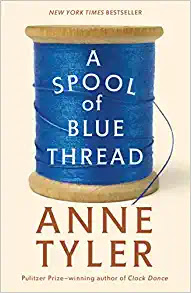
tiny book reviews.2021.n7 -- a spool of blue thread by anne tyler


Valerie's been trying to get me to read Anne Tyler for ages. I'm not sure why I haven't.

I needed something to read. I asked Valerie for an Anne Tyler book. This is what she gave me.

I don't really know what this book is about--a house, a family, a woman, a man, a child, ambition, class, migration, belonging... It's sort of about all of those things and not really any of those things. I'm not sure it's really about anything. But it's a lovely story. Anne Tyler--if this one book is anything to go by--is a stupendous storyteller. 

It's a light book. It's fun. There are laugh-out-loud moments. 

And, I guess, there are bits that one might consider moments of profundity--about the inevitable indignity of growing old, I think. About life cycles. But this is a light book. Which is to say not heavy. Tyler lays her profundity down like goose feathers rather than a lead blanket.

4 of 5 stars.

Monday, April 5, 2021

tiny book reviews.2021.n6 -- undaunted by john brennan


If you don't know, John Brennan was CIA Director during Obama's second term. He also worked in the White House during Obama's first term as Assistant to the President for Homeland Security. All of that after a full 25-year career with the CIA. 

This tiny book review comes in the form of four brief takeaways.

(1) The CIA is interesting, and reading about the experiences of a career CIA man was interesting. John Brennan's career in particular is interesting, but I imagine the memoir of any "company man" (or woman) would be similarly interesting.

(2) I enjoyed the insights Brennan's memoir provided regarding a host of geopolitical conflicts. He certainly prioritizes contemporary issues over historical ones, but, as it is a memoir, his career provides some historical context. Terrorism. Russia. Cyber security. China. North Korea. Middle East conflicts of many flavors. 

I love this stuff. More than once in reading the memoir I felt the familiar pangs of regret that I did not pursue a career with the State Department or similar.

(3) The country simply did not know how good it had it with President Barak Obama. The more I learn of Obama's presidency, the more I'm struck by the sense that he is, in every way, exactly the sort of person we should want as the country's chief executive. Smart. Thoughtful. Hard-working. Kind. Even ("no drama Obama"). Moral. Empathetic.

It's absolutely fine to hold differences of opinion regarding policy priorities and a vision for the country, but the personal attacks and questioning of his intentions during and after his presidency is just so dumb. He is a better person and was a better president than our country deserves.

(4) On the other hand, it might not be possible to find a person less qualified for the position than his successor, Donald Trump. I'm not sure there's much point to writing more. I guess I'll just say that Brennan's interactions with Trump once again highlight how pathetically ill-prepared and ill-suited he and his circle were for the presidency. 

I'm so glad that chapter has closed.

4 of 5 stars.

Friday, March 26, 2021

tiny book reviews.2021.n5 -- less by andrew sean greer

I think I've been awed by every Pulitzer Prize winning book I've ever read. Except this one.

There are books that at first don't impress, books that you kind of have to trudge through, do the work, put in the investment, only for everything to unfold wonderfully toward the end, making every page worth it. This is one such book, only the payoff wasn't quite worth the effort.

That's not to say that this was a hard book to read, because it wasn't. It went down easy, like a Fresca. But, also like a Fresca, I just didn't finish it feeling like there was much nourishment there, just a fleeting, momentary reprieve from thirst--it was good, I wanted more, but there was no more to be had. 

It just seemed sort of...empty. 

3 of 5 stars.

Thursday, March 25, 2021

tiny book reviews.2021.n4 -- uncanny valley by anna wiener


 In the spring of 2001, I was finishing a two-year, full-time MBA at the University of Utah, interviewing for jobs, and applying to doctoral programs--which is to say that I was managing my chronic indecision regarding big, life-defining decisions by attempting to keep as many doors open as possible for as long as possible. Analysis paralysis masked with the respectability of productivity.

I never really liked choose-your-own-adventure books. I'd build up too much anxiety over the choices not made, running out of fingers attempting to follow all of the paths forward. It felt a bit like that.

One of the jobs I was interviewing for was with Accenture. They were hiring for their offices in San Francisco (mostly private-sector clients and lots of travel) and Sacramento (mostly public-sector clients and less travel). Eventually, I was offered a job in the Sacramento office. I also, eventually, turned it down, taking, it seemed to me at the time, the more noble road by delaying employment and continuing with school.

Since then (and it only now occurs to me that I'm writing this almost exactly 20 years later), I've often entertained flights of fancy imagining an alternative universe where I take that job.

Uncanny Valley is fuel to those flights.

The Silicon Valley that Anna Wiener writes about is half a generation removed from what I might have found, had I moved to California, completed a stint at Accenture, and then (as seems probable) moved on to some tech-oriented company in northern California...somewhere. So I looked for myself in her story, a decade, or a decade and a half into my career. Well, I looked not so much for myself as for the alternate universe self had I made a different decision in 2001. 

So, who would have I been? 

I imagine myself as one of those anonymous mid-career tech guys with a resume of diverse experience (all good jobs, but nothing amazing) that is hired by startup firms in a hire-anyone-that-breathes mode, and given a mid-management supervisory role with the assumption that my age and the diversity of my experience qualify me for that role. Once hired, I would maneuver and jockey for options and buyout deals that, should our company win the IPO or acquisition lottery, I'd make out well enough to retire away from "real" work or (more likely) survive long enough to get another, similar job with another, similar company.

But who would I be

Would I be kind? Would I ride bikes? Would I have embraced the sometimes ugly, hyper-masculine, bro-ethic culture of tech? Would I believe in the products of the companies I worked for? Would I believe in the companies? Would I feel like the tech innovations I worked on inched the world toward something more just and egalitarian? Or would I wallow in self-loathing and contempt for being part of a machine that existed only for itself--growing, innovating, multiplying, and perpetuating itself for no other reason than the creation of (or the illusion of the creation of) wealth? Would I care about such things?

Well, that's where Uncanny Valley took me.

Also, a lot of thinking about how much the house my parents bought in Palo Alto around 1967 would be worth now had they kept it. Or, if they hadn't been scared off by the cosmopolitan pulse of progress and retreated to Colorado a year later as they did. 

The decisions around which lives pivot... 

As I said, I never really liked choose-your-own-adventure books. Too much anxiety.

3.5 of 5 stars.

Thursday, March 4, 2021

tiny book reviews.2021.n3 -- deacon king kong by james mcbride

Review: 'Deacon King Kong,' By James McBride : NPR

The second work of fiction on the NYTimes list of 2020's top ten that I took on, Deacon King Kong was a delightfully fun read.

It wasn't what I thought it would be. It wasn't what I thought it would be a chapter in, and it wasn't what I thought it would be halfway through. It just sort of got more and more fun the further I read. 

And now I find myself thinking of what more to say about the book and I'm just not sure... Partly because I wouldn't want to give it away--I think the book will be all the more fun a read for someone who doesn't have any idea what's coming. Partly because the deeper stuff, the sort of deep stuff that any meaningful work of fiction has to offer about some shady corner of the human experience, is transmitted in the best way fiction can do it, accidentally--that is to say that the book covers some fairly heavy territory, but you maybe don't realize you've been there until you stop to reflect. There's no bashing us over the head with thick morality tales or long-winded speeches in this one. So, if I were to go on now, giving label and definition to that deeper stuff, it seems I'd be doing the fine art of the story a disservice. 

Anyway, if you like fiction, and you like fun, give this one a read. Strongly recommend.

4.5 of 5 stars.

Tuesday, March 2, 2021

tiny book reviews (2021): two years eight months and twenty-eight nights, by salman rushdie

 Two Years Eight Months and Twenty-Eight Nights (Rushdie novel).png

Sometimes you're in the middle of a book and it's just so good that you don't really want to pick it up again because you know the more you read the less of it you'll have. 

Sometimes you're in the middle of a book and it's just good enough that you can't wait to get done doing whatever you're doing that's keeping you from the book so you can get back to it.

Sometimes you're in the middle of a book and it's interesting enough, but maybe not quite the right thing for right now so you pick something else up instead. You know you'll finish it, just not right now.

And sometimes you're in the middle of the book and you hate it. And you hate that you hate it, but you still hate it. And you're fully committed to finishing the book, because that's who you are--you're a person who finishes books--but holy. cow. this. book. is. just. so. bad.

For me, Two Years Eight Months and Twenty-Eight Nights was that book. 

...

Honestly, I'm sure Salman Rushdie has written good stuff. He's a super well-respected author. One doesn't just _become_ that for nothing. But this particular book, for this particular reader, had nothing.

I read this book because Rushdie got a lot of mentions in Homeland Elegies. And I've never read any Rushdie. And I'm old enough to remember the controversy over The Satanic Verses (though I didn't really know any more about it or him than that). So I figured I'd read some Rushdie.

Two Years Eight Months and Twenty-Eight Nights was what was available at my library. 

It's fantasy, I guess. Maybe you'd call it magical realism. Or someone might. A bit more magical than real, I think.

I got the sense that it was a parable of sorts. Or a retelling of some real history through myth. I think that's the point of magical realism. I didn't much care for One Hundred Years of Solitude because I didn't understand enough real Columbian social history to get it. I felt the same way reading this, except I didn't even know what continent I was on. 

And so I finished thinking that the book wasn't really written for me. It might be a great book...for a different reader. 

Then again, it may just be a crappy book.

It'll be a while before I can give Rushdie another try, but I will (probably with Midnight's Children). 

I feel like there's something here I need to know, like a dirt road you see meandering up that one particular draw--you trust there must be something up there and it's probably pretty awesome, but for whatever reason you've just never gone. 

Though, that might be the wrong metaphor--it might be that there's a whole other forest that I know next to nothing about, and that I've got to learn quite a bit more about that particular ecosystem before I can come to appreciate Rushdie trees.

I don't know. But I'll find out.

1 of 5 stars.

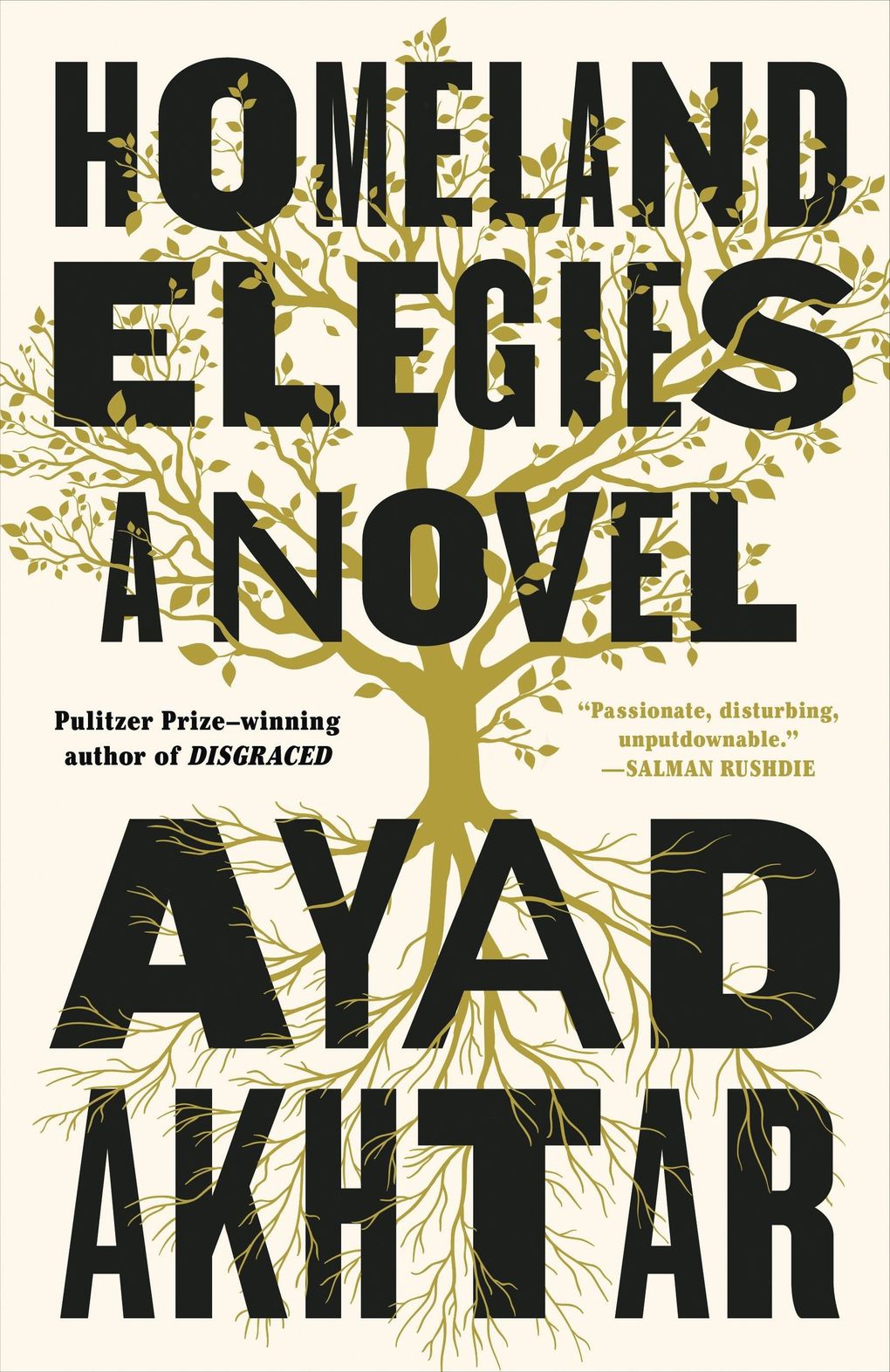
tiny book reviews (2021): homeland elegies, by ayad akhtar

With 'Homeland Elegies,' Pulitzer winner Ayad Akhtar cements himself as one  of America's most vital writers | The Seattle Times

At the end of last year, The New York Times published a list of its ten best books of 2020--five non-fiction and five fiction. This was the first of the ten I picked up. 

(Also, I may have actually finished it in 2020, but library records show that it wasn't returned until Jan 2, so I'm counting it for 2021.)

I really enjoyed this book. 

I'm not sure how much more I want to say about it than that. Still, I'll try.

It's a novel, but written as a memoir. I don't know enough about Akhtar to distinguish between what is autobiographical and what is not. I'm not sure that matters. What matters is that it reads true, as a memoir, so that you believe that you are reading stories about real people and true events. 

It's also about the relationships between fathers and sons. It's about politics. And it's about "making it."

It's also about what I would call a uniquely American life, in that the author is almost definitionally American, yet so much of the book is a narrative of the struggle of figuring out what that means, for him, as his identity bumps into his parents', who are immigrants, and his people, to the extent that his genealogy and national background define what "his people" means, and others' notions of an American is or should be.

Anyway, I loved it. And recommend it strongly. 

5 out of 5 stars.


Wednesday, October 14, 2020

on SASD's scuttling the plan to go hybrid

On Monday, October 12, the Shippensburg Area School District Board of Directors made the difficult decision to reverse plans to transition to hybrid schooling for grades 6-12 on November 10th.  Instead, the district will continue to offer an all-online delivery model through the second marking period, with exceptions for some students in special education.

I know this news comes as a considerable disappointment to many parents and students.

On the other hand, I know a large number are relieved by the decision, as the move to open schools has been viewed with skepticism and apprehension by many others.

I’ve received numerous communications from parents and other community members expressing both viewpoints.

As for me, I'm heartbroken over not being in school. I want to send my own kid back to school. And, frankly, telling him that he won't be going back--even for two days a week at the beginning of November as we had planned--was really hard. He wants to go back. Still, I believe it was the right decision.

While I certainly cannot speak for the entire board, I want to try to explain at least this one board member’s reasoning.

First, if we were to transition to a hybrid system in the beginning of November for the upper grades as planned, we would be doing so AGAINST the recommendations of our superintendent, the principals of the middle and high schools, and what appears to be a plurality of our teachers. This is not a small matter. If we were to direct our administrators to move to a hybrid system, I’m confident that they would do it as well as they could. I’m also confident that our teachers would do their very best. However, with a decision of this consequence, to go against the recommendations of the professionals that live and breathe the ramifications of these decisions daily is a heavy ask.

It should be noted that this recommendation did not come all-of-a-sudden. Planning for a hybrid-schooling model of some kind began even before the end of the last school year. I’m confident that the administrators, teachers, and staff involved in that planning have turned the matter around every which way. I know they’ve wanted to make it work. And I know they are disappointed they could not find a solution they felt comfortable recommending, as am I.

So, why has administration recommended against transitioning to a hybrid system for the upper grades? For a more detailed explanation, I strongly recommend listening to the presentations of the principals of the middle and high schools from Monday’s meeting. You can find a link to the meeting from the district website; click “School Board” —>  “Recorded Meetings" (or just click here).

For me, the reasoning for maintaining an online-only delivery model for the upper grades can be summarized into two categories of concern: logistic hurdles and educational outcomes.

To understand the logistical issues, please watch the principals’ presentations in Monday’s board meeting. For me, it was eye opening. Some notable examples: scheduling complexity resulting in class sizes that would exceed CDC social distancing requirements, position vacancies that we have been unable to fill, a substitute shortage that the COVID moment has only exacerbated, the reverberating consequences of a teacher needing to quarantine or isolate, and complicating teacher job duties to the point of absurdity.

But the educational outcomes piece is also critical. I have long assumed—and I know I’m not alone in this—that for most students any time in school would be better than no time in school. That while a “normal,” five-day, face-to-face model is preferred, a two-day hybrid model would be better than all online. For the lower grades, I still believe this to be the case. However, for the upper grades, this no longer seems at all clear. And as our public health professionals have strongly advised against going back to a "normal," five-day-a-week, in-person model until we dip below the 10 active COVID cases per 100,000 residents threshold, that really leaves us with only one choice.

(Cumberland and Franklin Counties have bounced around between 20 and 50 cases per 100,000 residents for the past three months. How other districts can make decisions that stare CDC and Pennsylvania Department of Health recommendations in the face is beyond me. I wish them luck, but I can't help but believe such decisions border on malfeasance.)

We could, of course, change our expectations as to what school is. In our present online model, kids get four days of live instruction from each teacher and one day of unsupervised, self-paced activities. In a hybrid system, I think the best we can expect is two days of live instruction, and three days of self-paced activities, but those two days of live instruction would be in-person rather than online. (I realize there are other hybrid models, but from what I understand, what I’ve described here is the least likely to break the backs of our teachers and therefore the most realistic—without teachers, we will have no school.)

Maybe, eventually, we will need to change our expectations. But, for me, the extra days of live instruction of an online delivery strategy coupled with the logistical entanglements of maintaining CDC guidelines with a hybrid system, are enough to convince me that at this point it would be inappropriate to transition our upper grades to a hybrid model.

Some will say that what the district needs to do is provide choice—hybrid for those that want it, an online option for those that prefer that strategy. By necessity, going hybrid requires both, because if a student needs to quarantine or isolate for whatever reason, they’ll need to move from hybrid to online and back again. However, in offering both delivery methods, we’re putting an expectation on teachers that they manage both. That is, both, simultaneously. In essence, we’d be requiring that each teacher now do two jobs. In the lower grades, we’ve been able to deal with this problem by assigning some teachers all-online duties. In the middle and high schools, because of schedule complexities, this just isn’t possible for a district our size.

A reasonable person would certainly be excused if they were to ask why, if the hybrid system is so problematic, had the board recently approved a hybrid start for grades 6-12 at the beginning of the second marking period?

Well, why did the board move toward a hybrid opening? Strong demand from the public, for sure. Wishful thinking on the part of the board, too. But also the assumption that a hybrid model would be educationally superior to a fully online model, and a misunderstanding of logistical issues at play.

So, to me, Monday night we corrected an error of judgment that we had earlier made--an error of judgment that went against the recommendations of the professionals we have employed to manage our community's schools. Furthermore, in the time that has passed, we’ve learned more about the challenges and shortcomings of hybrid schooling from those doing it.

For this flip-flopping, I am very apologetic. I deeply regret the confusion and frustration in the community that is an understandable result of this reversal of plans.

Finally, I absolutely recognize that reasonable people will disagree on the right way forward. I certainly do not have all the answers. I wish I did. In the end, as always, I vote in a manner that I believe is in the best interest of the children of our community. I have no other incentive.

I welcome your comments.

Tuesday, July 28, 2020

some (incomplete and unordered) thoughts on school reopening

(1) I’m frustrated by so many public comments in defense of face-to-face learning. No one is arguing that face-to-face isn’t preferable to virtual learning. That just isn’t the conversation.

(2) The decision as to how schools should reopen in the fall is bigger than the students and faculty and parents directly impacted. It’s a decision with very real public health ramifications, and (unfortunately) must be considered in that light.

(3) The fact that these decisions are being made by local school boards represents a massive failure of state and federal leadership. I support local governance, but a pandemic is not a local issue, and your local school officials do not have access to the same tools and expertise that state and national governments do.

It’s a pandemic… It should be self-evident that local action should be coordinated at the broadest level possible.

(4) I’m again and again struck by how terrible we (humans) are at evaluating risk, and, by extension, terrible at evaluating the efficacy of any risk mitigation strategies or protocols. We are terrible naive statisticians. I know this, and yet it still does not help me in making decisions, it just makes me more wary of anything that I think I know.

(5) While I believe that public schooling is an entitlement program that every American should embrace and even express pride in, there is a kind of ugly selfishness in the way some talk about their entitlement.

An illustration: When faced with the possibility that schools may reopen something close to virtual only, many respond, “WTF. Is the district going to compensate me for my childcare?!” Whereas a person embracing a paradigm of responsibility might say, “Shoot, this stinks. I do not like this, I do not agree with it, but I’ve gotta figure out a way to make this work.”

(6) Where is the teachers’ association in this discussion? I have not heard anything, neither directly nor indirectly, from our local teachers’ association.

I understand that teachers are divided in their positions and preferences, but helpful guidance might look something like this:

“If you go face-to-face, here are some concerns we’d like addressed.

“If you go virtual, here are some concerns we’d like addressed.”

(7) Related to the previous comment, any discussion of reopening MUST consider the health and safety of our teachers. As their employer, that is the district’s responsibility.

If even a minority (but significant number) of teachers do not feel safe in returning to face-to-face instruction, that poses a serious structural problem for the district. If, say, 10 teachers decide at the last minute that they can’t risk coming back to school and choose not to return, that puts the district in a serious pickle.

Furthermore, for those teachers who would return, but still do not feel safe doing so, one has to ask what impact that feeling of insecurity has on their ability to effectively do their job.

(8) Administration and faculty committees have been working on plans since before school let out. We’ve been discussing school reopening plans (not a complete plan, but bits and pieces) at board meetings for over two months.

Prior to last night's board meeting, grand total of public participants in those meetings? Maybe 25.

Prior to last night's board meeting, grand total of public comments during this planning period? 0.

(9) In public comments last night, one person suggested that the members of the board have already made up their minds so they might as well just vote. I’m not at all sure that’s true. I certainly don’t have things all figured out. My thoughts go all over the place on this. And I am very much swayed by new information or analysis (though hopefully not disproportionately).

(10) Personally, I am super frustrated that it’s taking us (as a board, as a district) so long to make a decision for the fall. It’s not only just really irritating, I also think it’s a pretty significant administrative failure. And I’m sorry.

Monday, July 27, 2020

reopening schools

Tonight, at 6:00 pm, the Shippensburg Area School District directors will meet to (hopefully) decide on a plan for school reopening. While the past months have been full of work and planning and a lot of hand-wringing, the board has yet to approve a course of action.

In the build-up to this decision, I've received quite a few letters and calls from concerned citizens. I appreciate their input and feedback.

Yesterday, I received one such email from a Shippensburg Area High School student. While this student sent their comments to the superintendent and all board members, I was not given permission to make their comments public, so I won't reproduce the letter here. However, I do want to share my response. It's not perfect, but it's not bad, and it gives a sense of where my head is in making this decision.

Also, it will be interesting for me to return to these thoughts in a month, six months, next year, five years from now, and so on. Likely, I will think differently about many of these things.

...

Hi _____,

I really appreciate you taking the time to write this letter and for sending it. It is very much appreciated.

The district has yet to make a final decision on our re-opening strategy. There is a public board meeting tonight, at 6:00 pm, and I encourage you to attend (it will be broadcast publicly--you can find the link on the district website).

However, I wanted to respond quickly to a few of your points.

First, I know EVERYONE would like to be able to go back to school as we're used to doing school. I would like that. Your school administration would like that. So would your teachers. However, that's just not possible. So we have to find a way to do the best we can under the circumstances.

A few thoughts on some of the points you've made.

I'm afraid you're very much mistaken on the negative health effects of wearing masks. I suggest you check your sources, and research this a little more completely. Your blood oxygen levels absolutely do NOT drop by 5-20% when wearing a mask. It's just not true. But imagine if it were...imagine if a surgery team of 6-10 people, all wearing surgical masks, for sometimes well over eight hours straight, were experiencing blood oxygen levels 80-95% of normal. Would you want that surgical team operating on you? Of course not. Because there is no such disability. Sure, masks are uncomfortable, but so are pants, and we've all got fairly accustomed to wearing them.

You are right that children get sick from COVID19 much less often and experience milder symptoms than do adults. However, older children (think 10-19) can still carry and transmit the virus. So, while the district must be concerned for the health of children, we also must be concerned about how the virus can be transmitted within the school, and then carried from it to more vulnerable demographics. School children do not live in a bubble. They interact with each other, then go home to mothers and fathers and grandparents, etc. Children can become the vectors for disease which can debilitate a community.

Furthermore, kids aren't the only ones in our schools. There are teachers, administrators, and all manner of support staff. These people matter too. Their health matters too. And, as you're already aware, these individuals are at much higher risk of suffering serious negative health consequences should they contract COVID19. Any decision the district makes regarding reopening schools must also consider their health and well-being.

The herd immunity argument you offer is compelling, but unfortunately it just doesn't seem to work quite that way with COVID19. In March, when we first realized--as a country, and beyond--that there was a global pandemic at play, we thought herd immunity would be the eventual answer. But what we're learning about how COVID19 is contracted and how our bodies build antibodies to it suggests that it may not be that simple. You're thinking (as I used to think) that once you get C19 and get over it, you're good. But we're learning that's probably the wrong way to think about it.

I appreciate your thoughts on a culture of fear, and I am sympathetic. Still, I don't let my children cross the street on their own until I know they are capable of making smart street-crossing decisions. I can't just say, "Don't live in fear; just send it!" when I know there's a high probability that "sending it" will result in serious injury or death to my child. There are limits and lines. I wish I knew what those limits and lines are in the present case, but I do not. I do not think anyone does. But I do know that doing nothing--pretending that COVID19 is just another flu--is dangerously irresponsible behavior for making either personal life decisions or decisions for the public good.

As to your comments on freedom, I'm afraid that argument falls on deaf ears here. Going back to my pants analogy, do you also feel that we should be "free" to go to school not wearing pants? Would you feel comfortable sitting next to someone not wearing pants? Or how about sharing a chair with another student who was not wearing pants? No? Well, what of that person's freedom to dress (or not dress) how they like? Should they not be free to not wear pants as you are to wear them? 

Freedom isn't getting to do whatever you want. Our freedom is curtailed everyday in myriad ways by powerful (and usually quite functional) cultural norms. That is a good thing. Personally, I'm quite glad that my freedom to drive is moderated by traffic signals and right-of-way laws. It's makes things work. It keeps us safer on the roads than we would be if we were "free" to use them however we like. 

Like it or not, you live in a community. You share space with thousands of other people. They also have rights. And your ability to exercise your freedom cannot infringe on their ability to exercise theirs. In civics, we call this idea "the social contract." I encourage you to look it up, and perhaps rethink your paradigm of what it means to be free.

Thank you again for taking the time to write and express your concerns. Again, it is very much appreciated. I hope this letter helps clarify some of the issues the district must consider in deciding to reopen schools for "normal" operation. 

Again, I encourage you to attend the virtual school board meeting this evening. 6:00 pm. Link on district website.

If you have any further questions or comments, I welcome them.

Take care,

ng